


🔍 Introduction to the Google Tensor G5
Google’s Tensor G5 marks a significant milestone in the company’s journey toward fully customized silicon. Designed to power the next generation of Pixel devices, the Tensor G5 is more than just a performance upgrade — it’s a foundational shift in how Google brings AI, efficiency, and user-centric experiences to its hardware.
Unlike its predecessors, the G5 is rumored to be the first Tensor chip fully designed in-house by Google, moving away from heavy reliance on Samsung’s fabrication and design. Built with AI at its core, the Tensor G5 is expected to deliver enhanced performance, better energy efficiency, and more advanced on-device machine learning capabilities.
From real-time language translation to smart photo editing and context-aware features, the Tensor G5 isn’t just about speed — it’s about making smartphones smarter and more intuitive.
Whether you’re a tech enthusiast, Pixel user, or simply curious about the future of mobile AI, the Tensor G5 represents a bold step toward a fully Google-powered ecosystem.

⚙️ Manufacturing Process
- Foundry Shift: From Samsung → TSMC
- Tensor G5 is manufactured by TSMC rather than Samsung Foundry.
- This is a big change because TSMC generally leads in transistor densities, yield, and process maturity, especially at advanced nodes.
- Process Node: 3 nm (N3 / N3E / N3P variants)
- The G5 uses TSMC’s 3‑nm class node. Some reports say specifically N3E, others mention “leading 3 nm process node from TSMC” without a letter.
- The “E” (in N3E) typically stands for Enhanced; it’s a second generation of the 3 nm process that improves on the first in terms of power / performance trade‑offs.
- Fully Custom Google Design
- Tensor G5 is reported to be Google’s first fully in‑house custom SoC for Pixel (not co‑designed via Samsung’s Exynos).
- Components: Google is integrating its own versions of TPU (Tensor Processing Unit), DSP, audio processor, etc., along with standard IP (like CPU cores from Arm, GPU from external providers).
- Packaging & Integration
- The chip may use advanced packaging tech such as InFO‑PoP (Integrated Fan-Out + Package‑on‑Package), which helps stack RAM / memory with the SoC more tightly, reducing latency, improving power delivery, and potentially better thermal behaviour.
- A smaller die from a more advanced node generally allows more transistors in less space, which can help reduce power wasted in interconnects, leakage, etc.
🔋 Efficiency & Performance Gains
Here are what Google claims, and what leaks / analyses show, in terms of efficiency improvements, battery life, and performance per watt.
| Metric | Claimed / Reported Improvement / Feature | What It Means / Implication |
|---|---|---|
| CPU Speed | ~34% faster compared to Tensor G4 / Pixel 9 generating CPU tasks. | Significant generational boost; higher clocks + better process = faster CPU in similar power envelope. |
| AI/TPU Performance | ~60% improvement in AI‑related tasks (TPU) over G4. | Better on‑device AI for things like speech, translation, image/video processing. May also allow more complex models on device. |
| Battery Life | Google claims “over 30 hours” on Pixel 10 under typical usage, which is better than the “over 24 hrs” or similar from previous generation. | Efficiency improvements allow same hardware to draw less power, or allow more usage for same power. Especially under mixed / AI workloads. |
| Thermal Efficiency | The move to 3nm + better process + packaging is expected to reduce heat under load (i.e. less throttling, more sustained performance). | Important for real‑world usage: gaming, camera, video, AI tasks; helps maintain performance without overheating. |
| Efficiency in Generative AI Models | Google says the on‑device Gemini Nano model runs about 2.6× faster and 2× more efficiently for some features (e.g. Screenshots, Recorder) compared to G4. | That means for certain AI tasks (likely those optimized, using reduced precision, or hardware accelerators), G5 is much more capable without draining as much battery. |

💡 What Makes the Efficiency Gains Possible
Putting together what is known, here are the key levers by which Tensor G5 achieves better efficiency:
- Advanced Fabrication Node (3 nm)
Smaller transistors: less leakage, lower switching energy, denser packing. - Better Yield & Process Quality at TSMC
TSMC’s maturity in 3 nm (especially N3E) helps with better control of variations, lower defect density, which helps reduce power inefficiencies. - Better Design Transparency / Customization
Since G5 is fully custom, Google can optimize exactly what it needs (CPU cores, AI units, memory buses, etc.), removing extra overhead or non‑essential parts that cost power. - Improved Thermal Paths & Packaging
Through better packaging (like InFO‑PoP), thermal conduction, power delivery, and interconnect delays are reduced, which also helps energy efficiency. - Software & Model Optimization
Not purely hardware: things like using optimized AI models (e.g. lighter weights, quantization), better scheduling of workloads, duty cycles (i.e., using big cores only when needed) all matter. Google’s claim of “2× more efficient” for some AI tasks is likely due to both hardware pre‑optimization and software/model improvements.
⚠️ Caveats & What Is Not Yet Known
- The exact power numbers (watts, milliwatts) for typical tasks are not yet fully published in independent reviews.
- How the GPU performs under long gaming/graphical workload is still less clear; gains may be less pronounced for heavy 3D/gaming tasks compared to AI / CPU.
- The real‑world efficiency may still depend heavily on cooling, phone design, battery size, OS power management.
- Whether pushing clocks higher comes at some trade‑off in battery in peak loads—quicker tasks are faster, but sustained loads (gaming/video rendering) still depend on thermal throttling and power budget.
✅ Summary
Putting it all together, the Tensor G5 represents a strong leap in manufacturing sophistication and efficiency compared to earlier Tensor chips, thanks to:
- Using TSMC’s 3nm (especially N3E) for better transistor performance and lower power usage.
- Fully custom Google design, which lets them strip inefficiencies.
- Improved packaging and integration with memory and AI hardware.
- Software & AI optimizations that take advantage of the hardware.
For consumers, this should mean faster performance, cooler operation, longer battery life, especially under AI‑heavy or mixed workloads. Not everything is perfect yet, but the foundations are much stronger than before.
🧰 CPU Architecture & Specs
These are the core changes that underpin the performance improvements in Tensor G5:
| Component | Details / Rumors |
|---|---|
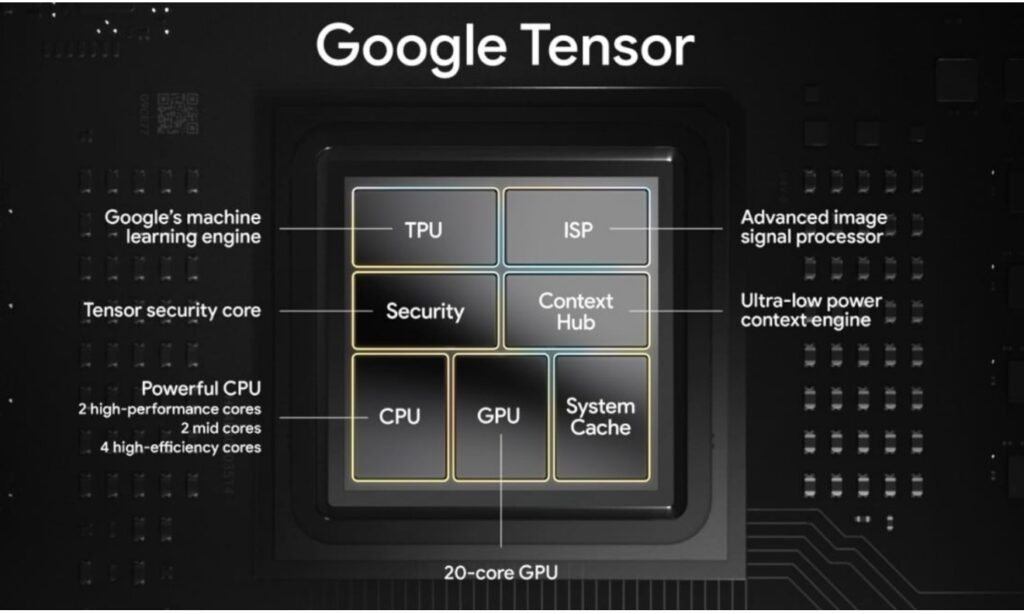
| Core Configuration | The Tensor G5 uses an 8‑core Arm Cortex CPU in a 1 + 5 + 2 layout: 1x Cortex‑X4 (prime big core), 5x Cortex‑A725 (mid cores), 2x Cortex‑A520 (efficiency cores). |
| Clock Speeds | Leaks suggest the big core (X4) runs around 3.78 GHz, the A725s around 3.05 GHz, and the A520s around 2.25 GHz. |
| Process Node | Manufactured on TSMC’s 3 nm class process (either N3E or N3P / enhanced versions). This is a major jump from Tensor G4’s 4 nm process. |
📈 Performance Gains vs Tensor G4
Based on benchmarks and reports, here are the major areas where G5 shows improvement over G4:
| Metric | Tensor G5 Improvement | What That Means in Practice |
|---|---|---|
| Overall Benchmark (AnTuTu) | G5 scores ~1,291,252 vs G4’s ~1,069,935 in some tests — ~20‑25% higher overall. | |
| CPU Portion of AnTuTu | Big jump: for example ~457,073 for G5 vs ~196,635 for G4 in indexed tests. That’s roughly 2.3× higher in CPU raw benchmark workload in that test. | |
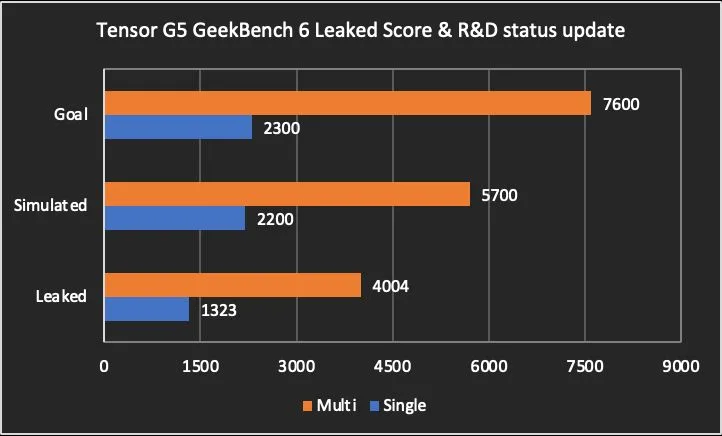
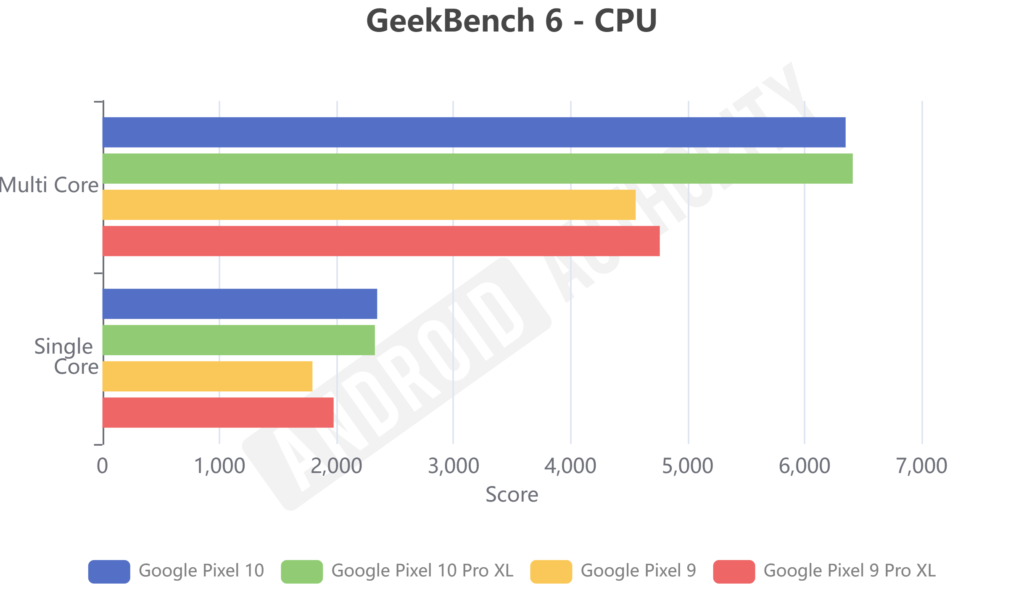
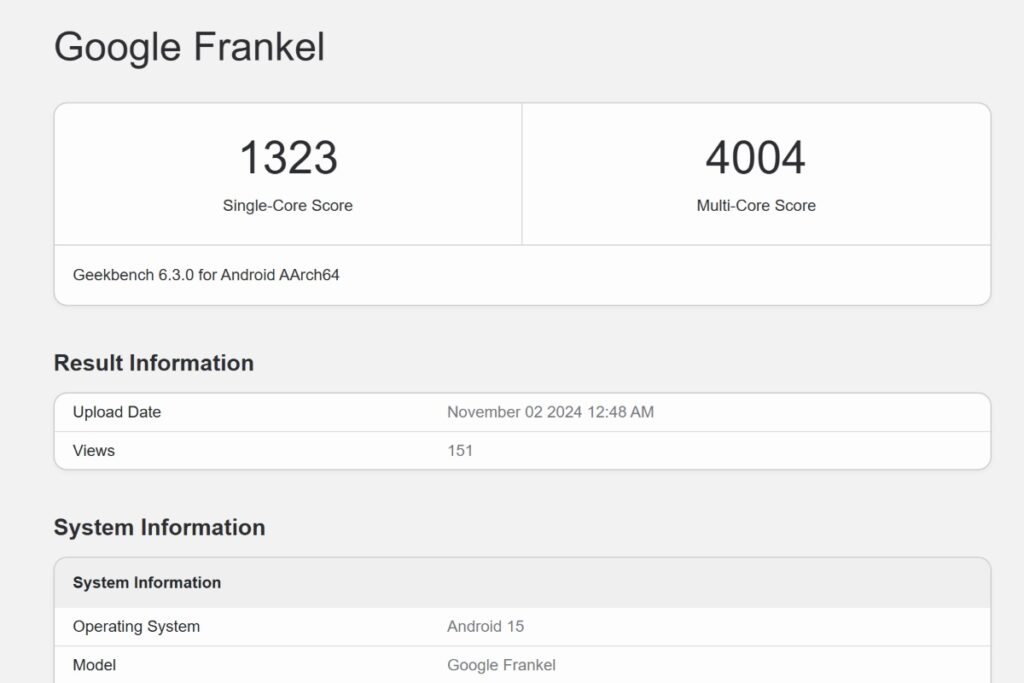
| Geekbench (Single‑core & Multi‑core) | • Single core: G5 ~2,285 vs G4 ~1,900–1,930 → ~18‑20% gain • Multi‑core: G5 ~6,190+ vs G4 ~4,580 → ~30‑40% gain. | |
| Throttling / Sustained Load | G5 maintains better performance under sustained load compared to G4 — though it still throttles after a couple of minutes; average and minimum sustained performance over long CPU‑heavy work is higher. |

🚀 Why These Gains Happen (Key Enablers)
Here are the technical reasons behind the performance boost:
- More Efficient Fabrication (Smaller Process, Better Yield)
Moving to TSMC’s 3 nm gives better transistor density, lower leakage, and improved energy per operation. This allows higher clock speeds without exploding power or heat. - Better Mid‑Core Count & Balance
G4 had fewer “mid‑performance” cores (A720 cores) than G5 has (which uses more A725 cores). Having more of these “middle” cores boosts performance for multitasking or mixed workloads. - Higher Clock Speeds
The prime core (Cortex‑X4) is clocked higher, and mid cores also see improvements. Even though raw core architecture (IPC) gains may be modest, combining that with higher clocks contributes significantly. - Better Thermal / Power Management
Because of the process improvement (better cooling, less waste power, etc.), the chip can sustain higher performance for longer, before throttling. This helps benchmarks and real‑world usage.
⚠️ Comparisons & Limitations
While G5 improves a lot over G4, there are still places it doesn’t lead:
- Against Other Flagships: For example, Apple’s A18 or Apple chips generally perform better in single‑threaded tasks (higher IPC, efficient cores) and often have better GPU performance.
- GPU / Graphics: CPU is improved, but GPU gains are more modest. Some benchmarks show a drop or only slight gains for GPU versus previous gen, meaning CPU is stronger relative to its graphics performance.
- Throttling under heavy sustained load: Even with improvements, the chip does throttle under prolonged all‑core CPU loads. The drop isn’t as bad as older Tensor chips, but it’s still there.
✅ Summary of CPU Boost
Putting it all together, here’s what you can expect from Tensor G5 in terms of CPU performance compared to Tensor G4:
However, still some catches: doesn’t beat all flagships in every metric, some limitations in graphics, and some throttling remains under extended load.
Roughly ≥30‑40% better multi‑core CPU performance
Around ~20% better single‑core performance
Significant improvements in responsiveness, multitasking, and mixed workloads
Better sustained performance under heavy usage
🔍 What Google Claims
From Google’s announcements and the Pixel 10 launch:
- The TPU (Tensor Processing Unit) in G5 is “up to ~60% more powerful” for AI workloads compared to Tensor G4.
- The G5 runs the “newest” Gemini Nano model from DeepMind more efficiently: about 2.6× faster and 2× more efficient for features like Screenshots, Recorder, etc., compared to how G4 ran similar tasks.
- The context window (how much input the model can consider at once) is significantly larger: up to 32,000 tokens on G5 vs ~12,000 on G4.
- More than 20 on‑device AI features at launch are enabled / improved via G5, including Magic Cue, Call Notes with actions, Voice Translate, new smart editing in Gboard, etc.
📊 What Leaks / Reviews Add / Confirm
Besides Google’s claims, leaks / benchmarking show further details:
| Enhancement | Details from leaks/reviews |
|---|---|
| TOPS / Raw AI Compute | • Reports suggest the TPU achieves ~18 INT8 / ~9 FP16 TOPS on G5. • That is up from G4’s ~13 / ~6.5 TOPS (INT8 / FP16) in comparable workloads. |
| New Model Architecture Tricks | • G5 supports “Per‑Layer Embedding” which allows parts of the model to be loaded / fetched from flash in small increments. That helps when RAM is limited. • Also mentions of “Matformer” architecture used with DeepMind for efficiency in running on‑device models. |
| On‑Device Training / Flexibility | • There are mentions in leaks that G5’s TPU supports some forms of on‑device training or at least more flexible operations (e.g. embedding parts of models, dynamic switching) rather than being purely inference‑focused. • Also embedded RISC‑V cores in the TPU for handling operations that the fixed hardware doesn’t cover. |
| Efficiency Gains | • The claims of “twice as efficient” for certain tasks and “2.6× faster” for others. These are for specific use‑cases (e.g. screenshots, Recorder) rather than general compute. • Larger token window (32k) means more context can be held in memory, reducing the need to offload or repeatedly fetch data, which helps both performance and energy usage. |
🛠 What These Enhancements Mean in Practice
Putting together what Google claims + what leaks/reviews show:
- Richer On‑Device AI Experience
More complex models (Gemini Nano) can run locally without needing the cloud, which improves latency, privacy, and offline usability. - Better Responsiveness and New Features
Features like real‑time voice translation, summarizing calls (“Call Notes with actions”), smarter photo editing or contextual suggestions are faster and use less battery. - Higher Context Awareness
With a larger context window, the model can remember and work with more information (e.g. past messages, larger text / prior app state) which improves continuity for generative/assistant‑type tasks. - Efficiency / Battery Life Improvements
Because many AI tasks are being done on‑device, and the TPU is more efficient, there’s less need for always‑on cloud processing and less energy lost to data transfer. This helps preserve battery. - Greater Flexibility and Future Proofing
With embedded cores for operations that hardware might not natively support, Per‑Layer Embedding, possibility of on‑device training, these allow Google to update and extend AI functionality over time without needing radically new chips.

⚠️ Limits / What Is Not Fully Clear
GPU / graphics tasks are not necessarily improved in the same proportion as TPU tasks; gaming performance or graphically intense workloads might lag rivals in that particular area.
The “60% more powerful TPU” is in certain AI workloads; generalized gains across all AI tasks will vary. E.g. tasks heavy on memory movement or non‑standard operations may not scale as cleanly.
The real‑world difference might be less than theoretical TOPS would suggest, especially when thermals, noise, device design/heat dissipation, and RAM constraints come into play.
On‑device models, especially large ones, are still constrained by RAM, storage, power; even with enhancements like Per‑Layer Embedding, swapping / loading from flash may introduce delays or overhead.
📸 Hardware Camera Upgrades
| Component | Pixel 10(Standard) | Pixel 10 Pro / Pro XL |
|---|---|---|
| Rear Camera Setup | Triple rear cameras: 48 MP main, 13 MP ultra‑wide, 10.8 MP telephoto with 5× optical zoom. | Pro models get higher resolution sensors: 50 MP main, 48 MP ultra‑wide, 48 MP telephoto (5× optical) with Pro Res Zoom up to 100× digital zoom. |
| Primary Sensor | 48 MP, with OIS, larger/improved sensor compared to some past standard Pixels. | |
| Ultra‑Wide | 13 MP, ~120° FoV, improved over some prior models. | |
| Front / Selfie Camera | 10.5 MP with autofocus, wide‑angle (~95°) on standard model. Pro versions have much higher resolution front cams. | |
| Low‑Light / Night Capabilities | Improved due to the new Image Signal Processor (ISP) — better motion deblur, better handling of low light. Night Sight Video improvements on Pro models. | |
| Zoom Enhancements | Standard model gets 5× optical telephoto; digital zoom (Super Res) up to 20×. Pro models push this further with Pro Res Zoom up to 100×. |
🔧 Software / ISP (Image Processing) Upgrades
- Custom ISP: Tensor G5 has Google’s first fully custom Image Signal Processor, moving away from modified Samsung ISPs. This gives more flexibility in image processing pipelines.
- 10‑bit video by default (for 1080p and 4K@30fps) on standard and Pro models, which allows greater color depth and better HDR transitions.
- Improved Real Tone: Better skin tone rendering across different lighting and skin types, more accurate and natural.
- Motion Deblur / Better Video in Low Light: The ISP + TPU improvements improve stabilization, motion deblur for both photos and video, especially in challenging lighting.
- Add Me, Auto Best Take: New AI‑assisted features for selecting best shots in burst / group photos, etc.
- Pro Res Zoom: Higher‑quality zoomed images using combinations of optical + computational zoom, helped by TPU + ISP. Pro models deliver up to 100× digital zoom.
- C2PA Content Credentials: For image metadata/authenticity: The images/videos can be marked with secure metadata about origin / edits, helping with attribution / verifying the edit history.

🌅 What This Means in Real‑World Photo/Video Quality
More flexibility: with features like “Auto Best Take,” users don’t have to manually pick good group shots or hope one is good—AI helps pick the best. Also, voice/photo editing gets smarter and faster.
Better detail in zoomed shots due to optical + improved computational zoom. Pro models reach very high digital zoom with less softness/noise.
More accurate color rendition, especially skin tones, under varied lighting; less blown highlights or muddy shadows.
Improved performance in low light and night time video: less motion blur, better frame stability.
More usable video, sharper results, especially when moving or handheld, due to ISP + stabilization improvements.
Battery Life & Thermal Behavior of Tensor G5
The Tensor G5 offers noticeably improved battery life compared to previous Tensor chips, thanks largely to its 3 nm class process and better power management. Google claims that Pixel 10 phones provide “over 30 hours” of mixed usage, a meaningful bump over the Pixel 9 series. Real‑world testing confirms this: one reviewer reported roughly 6‑7 more usable hours compared to a Pixel 9 Pro XL under similar usage patterns.
Thermally, the G5 makes a strong stride forward. In everyday tasks like browsing, photography, and video streaming, it runs significantly cooler than its predecessor, with fewer hot spots and better sustained performance. Under gaming or other heavy workloads, temperatures do rise (e.g., around 42‑43°C in some demanding sessions), and some throttling is still observed, especially in the base Pixel 10 without the more advanced cooling found in Pro models. However, the stability in looped GPU/benchmark tests is much improved: for example, the Pixel 10 Pro XL retains ~95% of its peak performance over repeated stress tests, striking a better balance between performance and overheating than many past Tensor‑based phones.
🧩 Other Features of Tensor G5 / Pixel 10
Model architecture tweaks like Per‑Layer Embedding to adjust memory usage depending on task.
On‑Device AI & Proactive Help
New AI‑driven features like Magic Cue surface relevant information in apps such as Messages or Phone (e.g. pulling up flight info during a call) without switching apps.
Voice Translate provides real‑time translation on phone calls, preserving the speaker’s voice for a more natural feel.
“Call Notes with Actions”, “Personal Journal”, and other tools that use on‑device AI to summarize, suggest actions, reflect on your data/activities in a private way.
Display & Design Improvements
Displays (“Actua” / “Super Actua”) with higher peak brightness — e.g. standard Pixel 10 around 3000 nits, Pro/Pro XL up to 3300 nits. Makes a big difference in sunlight readability.
Hardware build refinements: satin‑finish metal frame, polished glass back, more recycled materials, new expressive color options.
New style/UI updates, like Material 3 Expressive: updated animations, UI fluidity, more personalization.
Wireless Charging & Accessories — Pixelsnap / Qi2
“Pixelsnap”: built‑in magnetic ring to support Qi2 magnetic wireless charging, stands/grips, etc. Avoids need for third‑party magnetic accessories.
Wireless‑charging speeds: Pro XL gets up to 25W wireless charging; standard is less but includes magnetic charging.
Security & Updates
Includes Titan M2 security chip in addition to Tensor G5, for hardened security from manufacturing to runtime.
Strong guarantee on software / security updates: 7 years of Pixel Drops and OS/security updates.
Foldable Model & Durability
Pixel 10 Pro Fold: new gear‑less hinge claimed to be twice as durable; also rated IP68 for water/dust resistance.
The inner display (8‑inch Super Actua Flex) and outer cover screen have high brightness, reinforced glass for durability.
Context & Input Enhancements
Gboard enhancements: writing tools (style rewrites, voice commands to rephrase) built‑in.
Gemini Live integrates with apps like Calendar, Maps, Tasks, Keep for hands‑free or overlay interactions.
Display Refresh Rates & Configurations
Standard / Pro / XL models have high refresh rates (1‑120 Hz) for smoother motion when scrolling / animations.
Variety of screen sizes: e.g., 6.3‑inch standard, up to 6.8‑inch for Pro XL, foldables even bigger; cover displays included.
Context Window & Model Scaling
Tensor G5 with Gemini Nano supports a large context window (≈ 32,000 tokens) meaning more input (text, images, emails) can be considered in context by the model, which improves tasks like summarization, long conversations.
📌 Google Tensor G5 – FAQ
❓ What is the Google Tensor G5?
The Tensor G5 is Google’s latest custom system-on-chip (SoC), powering the Pixel 10 series. It features major improvements in CPU, GPU, AI/TPU performance, battery efficiency, and camera processing, and is built on TSMC’s 3nm process for better performance per watt.
❓ How much faster is the Tensor G5 compared to G4?
CPU Performance: Up to 30–40% faster in multi-core tasks.
Single-core gains are around 18–20%.
AI/TPU workloads are up to 2.6× faster with Gemini Nano, and about 60% more efficient than G4.
❓ How is battery life with the Tensor G5?
Pixel 10 devices with Tensor G5 typically deliver 30+ hours of daily use, with up to 100 hours using Extreme Battery Saver on Pro XL models. Efficiency gains come from the 3nm node and optimized software/thermal management.
❓ Does the Tensor G5 overheat like earlier Tensor chips?
No — thermals are significantly improved. While heavy tasks (gaming, 4K recording) still generate heat, throttling is much less aggressive, and Pro models use vapor chamber cooling for better heat dissipation.
❓ What AI features are enabled by the Tensor G5?
Voice Translation during phone calls
Call Notes with Actions
Magic Cue (context-aware prompts)
Personal Journal, AI photo editing, Live summaries
Full on-device Gemini Nano support with up to 32,000 token context window
❓ What are the camera upgrades tied to Tensor G5?
Improved ISP enables better night video, motion deblur, and 10-bit HDR.
Pro models use “Pro Res Zoom” with 5× optical and 100× digital zoom.
Features like “Add Me,” “Best Take,” and Real Tone v2 are AI-enhanced.
❓ Is Tensor G5 good for gaming?
Gaming performance is improved, but not top-tier. GPU gains are more modest than CPU/AI. Still, gaming is smoother than G4, and sustained performance is better due to lower thermal throttling.
❓ How long will Google support Tensor G5 devices?
Google guarantees 7 years of OS and security updates for Pixel 10 phones powered by Tensor G5 — among the best in the Android ecosystem.
❓ Does Tensor G5 support new charging standards?
Yes — Pixel 10 series supports Qi2 magnetic wireless charging (called Pixelsnap), plus fast wired charging (up to 30W+ on Pro XL). USB PD and reverse charging are supported too.
❓ What’s the main difference between Tensor G5 and Snapdragon 8 Gen 3?
Snapdragon has a more powerful GPU and stronger single-core performance.
Tensor G5 focuses on AI workloads, camera processing, battery life, and tight integration with Google’s services.
If you care about AI features, clean UI, long updates, and camera smarts — Tensor G5 excels.
Conclusion
The Google Tensor G5 represents a significant step forward in Google’s custom silicon journey, delivering meaningful improvements across performance, AI capabilities, camera processing, battery efficiency, and thermal management. Built on an advanced 3nm process, the G5 enables Pixel 10 devices to offer longer battery life, smoother multitasking, and enhanced photography experiences backed by powerful AI-driven features.
While it may not compete directly with the absolute top-tier Snapdragon chips in raw GPU horsepower, Tensor G5 shines in integrating Google’s software ecosystem and AI innovations seamlessly, providing a uniquely optimized experience for Pixel users. With robust security features and an industry-leading update commitment, the Tensor G5 powered Pixel 10 series strikes a balance between power, efficiency, and smart functionality—making it an excellent choice for users seeking a modern, AI-enhanced smartphone.