🇳🇵 Nepal 2025: Key Events & Overview
1. Gen Z‑led Protests & Social Media Ban
- On September 4, 2025, the Nepali government imposed a ban on 26 social media platforms (including Facebook, X, YouTube, WhatsApp etc.), citing reasons such as failure to register with authorities, misinformation, hate speech, and other regulatory compliance issues.
- The ban triggered widespread anger, especially among young people (Generation Z: born ~1995‑2010). Demonstrations began peacefully but quickly escalated as protesters accused the government of corruption, nepotism, inequality, and suppressing freedom of expression.
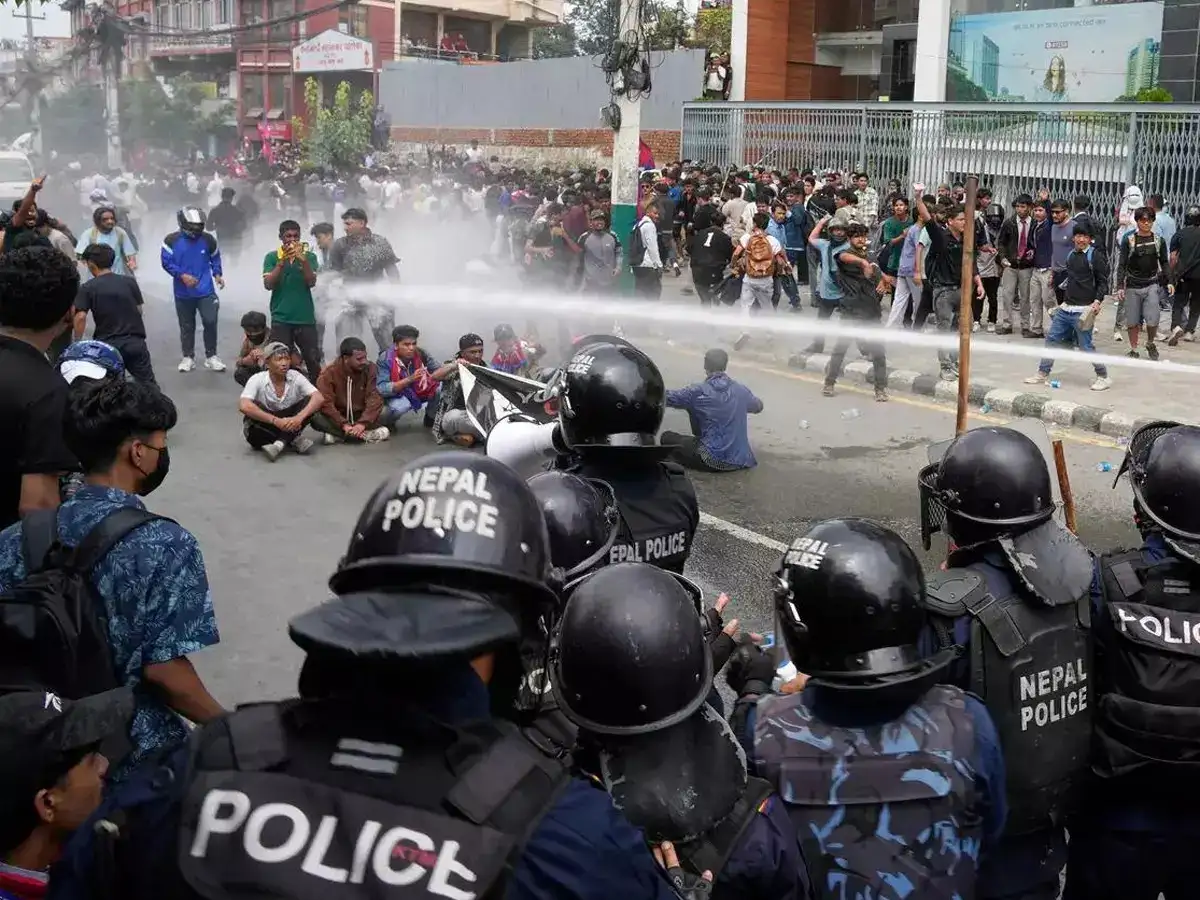
- Protests turned violent in several places. Security forces used tear gas, water cannons, rubber bullets, and at some points live ammunition. There were confrontations near Parliament in Kathmandu and other cities.
- By early September, official reports estimated at least 17‑20 people dead and many hundreds injured. Some later reports raised the figure.
- As a result of the backlash, the government lifted the social media ban.
2. Storming of the Parliament & Political Fallout
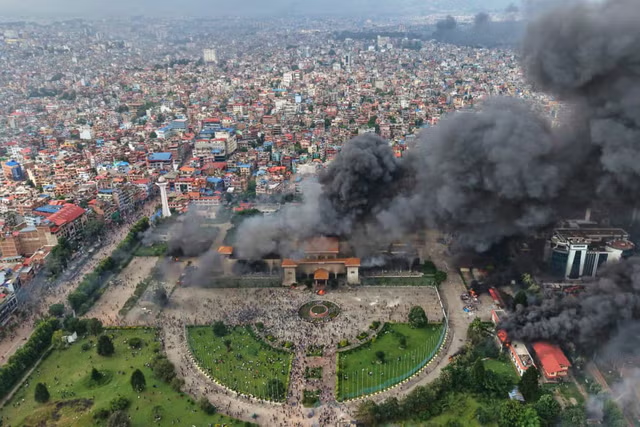
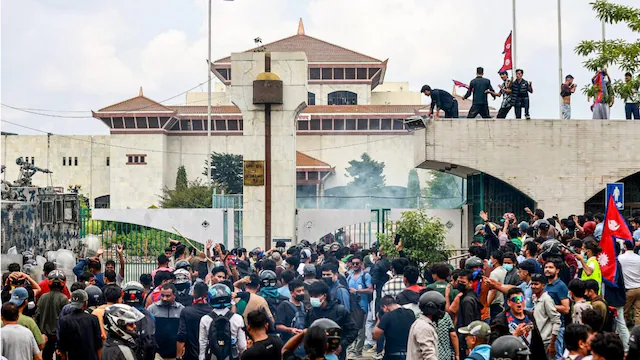
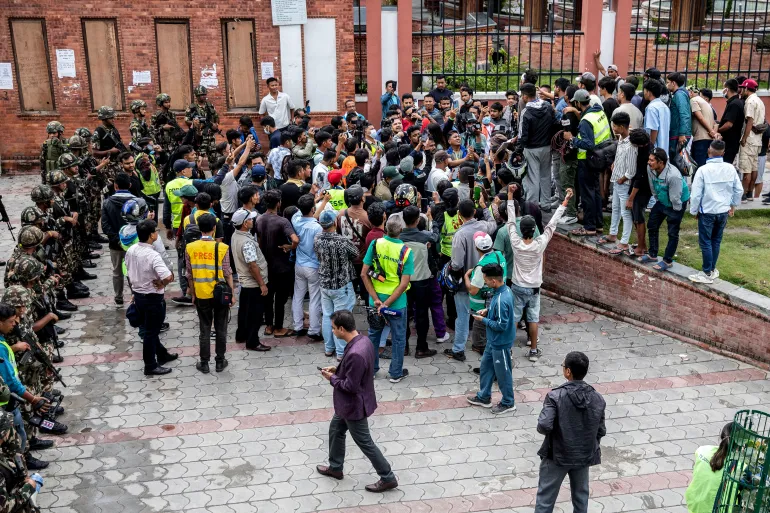
- Protesters breached barricades around the Federal Parliament Building in Kathmandu. The parliament complex and other government buildings were attacked or set on fire in some reports.
- Prime Minister K.P. Sharma Oli, already under criticism, saw his position severely weakened by these protests. Several cabinet ministers also resigned, claiming moral responsibility.
- The unrest represents some of the worst political instability Nepal has seen in a long time, triggering questions about governance, leadership, accountability, and trust in political institutions.
3. Underlying Causes
- Corruption and Nepotism: A major driver of discontent among youth is the perception that political elites are corrupt, misuse power, enjoy luxury lives disconnected from ordinary citizens. The social media ban — which tried to force platforms to register — was seen as another tool to control narratives.
- Economic Hardship: Inflation, unemployment, especially among youth, difficulties in public services, and economic inequality have been long-standing issues. The protests put these in sharper focus.
- Free Speech & Civil Rights: Many perceived the social media regulation and ban as a threat to free speech. Critics claimed that while regulation is legitimate, the way it was imposed (suddenly, broadly, with heavy enforcement) was oppressive.
4. Other Political Movements: Pro‑Monarchy & Republic vs Monarchy
- Earlier in 2025, there were pro‑monarchy protests. Some groups demanded restoration of constitutional monarchy or greater role for monarchy and Hindu Nepal. These protests were often in tension with republican supporters.
- On dates like March 28, 2025, large rallies happened in Kathmandu by pro-monarchy groups, some demonstrations turned violent; clashes with police, damage to properties, arrests were reported.
5. Economy & International Assistance
There were some relief measures such as fuel price cuts. These eased some burdens, but the structural problems (power supply issues, infrastructure, joblessness) remain unresolved.
Earlier in the year, the IMF disbursed US$41.8 million under its programs, recognizing that Nepal had made reform progress, but also cautioning about fiscal risks, weak domestic demand, and political instability.
🚨 What Sparked the Protests
- On September 4, 2025, the Nepal government announced a ban on 26 social media platforms including Facebook, Instagram, WhatsApp, YouTube, and X (formerly Twitter). These platforms had failed to comply with new registration requirements set by the Ministry of Communication and Information Technology.
- The government said the registration process was necessary for enforcing regulatory compliance (e.g. appointing grievance officers, liaison in Nepal) and taxation rules. Critics, however, saw it as a move towards censorship and control.
👥 Who Are Protesting & What They Want
- The protestors are largely Gen Z youth—students in universities and high schools—along with many young people frustrated by corruption, nepotism, lack of opportunity, and inequality.
- Their demands include:
- Reversal of the social media ban.
- Accountability for corruption and misuse of power.
- Respect for free speech and democratic rights.
📍 Timeline & Major Events
| Date | Event |
|---|---|
| Sept 4, 2025 | Government issues the ban on 26 social media platforms for failing registration. |
| Sept 8, 2025 | Massive protests begin in Kathmandu and other cities. Thousands of students and young people gather, many in school/college uniforms. Protests reach critical mass near the Federal Parliament and Maitighar Mandala. |
| Security forces respond by using tear gas, rubber bullets, water cannons, and eventually live ammunition. Barricades are breached; major confrontations near Parliament. | |
| Sept 8‑9, 2025 | Deadly incidents: At least 17‑19 people killed in Kathmandu; others die elsewhere (e.g. Itahari). Hundreds injured. Curfews imposed in Kathmandu and other cities. Government begins emergency actions. |
| Pressure mounts. Home Minister Ramesh Lekhak resigns. Government decides to lift social media ban. PM Oli expresses sorrow; announces compensation and medical care for injured. |
⚠️ Violence & Casualties
- Reports (from Human Rights Watch and news agencies) say lethal force was used against protesters. At least 19 dead (some reports go higher) and many dozens injured.
- Many injuries from bullets, tear gas, etc. Hospitals flooded; morgues and trauma centers under strain.
- There are also questions about whether some of the violent escalation was due to protestors breaking through barriers, but also whether police response was disproportionate. Human rights orgs have raised concerns.
🏛 Political Impact & Outcome
- The government lifted the social media ban after intense nationwide protests and casualties.
- Resignations: Home Minister Ramesh Lekhak stepped down. Other political fallout includes internal pressure on PM K.P. Sharma Oli.
- Curfews, deployment of army, and restrictions in key locations (esp. capital) to try to control unrest.
🔍 Broader Causes & Context
- These protests are not just about the social media ban. They build on years of youth dissatisfaction: persistent corruption, nepotism, poverty or lack of economic opportunity, inequality, and a sense that political elites are disconnected.
- The “Nepo Kid” trend (highlighting children or relatives of powerful politicians showing lavish lifestyles) was one element that exacerbated the perception of inequality.
- Digital native youth (Gen Z) who use social media heavily felt the regulation was not just legal but symbolic of suppression of voice.
🔮 What This Means & What’s Next
Risk of prolonged unrest, especially if economic conditions don’t improve or if the response is seen as inadequate.
The protests have exposed major fragility in government legitimacy and have opened up serious debates about governance, regulation, and civil liberties in Nepal.
There’s likely to be investigations (official inquiry panels) into how force was used, how many died, etc.
The lifting of the ban may calm one front, but many protestors want broader changes— accountability, transparency, possibly even structural political reform.
🧭 What Happened: Resignation of the Prime Minister
Context & Trigger
- In early September 2025, widespread protests erupted across Nepal. These were largely led by Gen Z activists, students, young people, and others. The proximate trigger was the government’s decision to ban 26 social media platforms, citing failure to register with Nepal’s authorities under new regulatory requirements.
- These bans were very unpopular, seen by many as censorship, but protests also encompassed broader discontent: corruption, nepotism, economic hardship, youth unemployment, disconnect between political elites and the general population.
Key Events Leading to Resignation
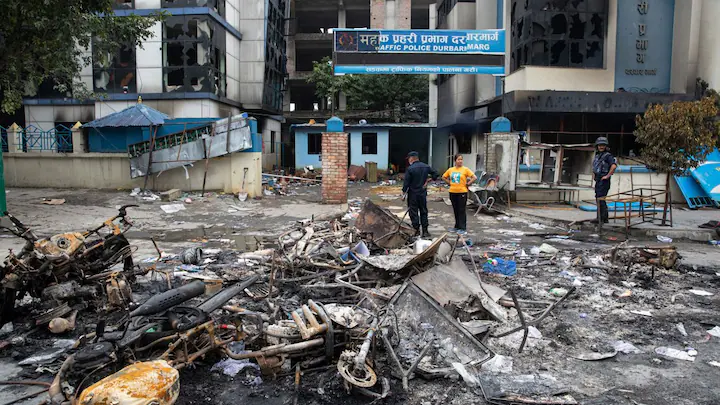
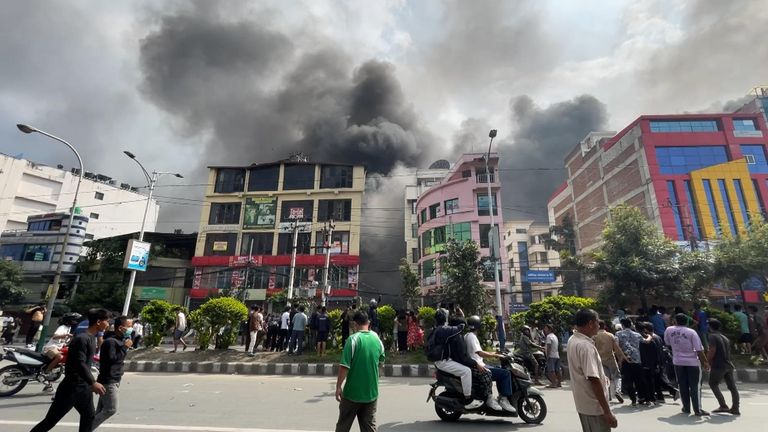
- Protests escalated, with confrontations between security forces and protesters. There was property damage: protesters set fire to government buildings, the Parliament, Supreme Court, parts of the prime minister’s private residence, etc.
- On 8 September 2025, the Home Minister, Ramesh Lekhak, resigned after at least 19 people were killed in clashes with police; many more were injured. This was an early sign of ministers distancing themselves from the government’s handling of the situation.
- On 9 September 2025, with protests continuing, spillover of riots/damage, worsening situation, PM Oli tendered his resignation to President Ram Chandra Paudel under Article 77(1) of the Constitution. He cited the “extraordinary situation” and said he was resigning in order to allow a constitutional resolution of the crisis.
After Resignation
- President Paudel accepted the resignation. As per constitutional norms, a caretaker government remains in place until a new government is formed or fresh elections held. Oli also was reported to be placed in “a secure location” (some reports mention Shivapuri) amid concerns of safety.
- Ministers had begun resigning prior to Oli’s departure: not just the Home Minister, but others. The ruling coalition appeared fractured. Some leaders called for Oli to resign immediately; internal pressure from his own party (CPN-UML) and coalition partner(s) increased.
⚙️ Interim / Caretaker Government: What’s Known & What’s Being Debated
Possible Candidates
- Among people being discussed for leading an interim government are:
- Sushila Karki, former Chief Justice of Nepal. She has become a front-runner in many reports.
- Kulman Ghising, known for his work with the Nepal Electricity Authority and seen favorably by many protesters due to his reputation for resolving the energy crisis.
- Balendra Shah, the mayor of Kathmandu, is also being considered in some circles.
Constitutional / Legal Constraints
- The Nepal constitution provides that after a Prime Minister resigns, the President has to manage the process of forming a new government. Until then, the outgoing PM typically remains in a caretaker role.
- There is debate on how “interim government” should be constituted — whether it should include members from existing parties, be technocratic, or reflect protest-led representation. Some of the demands from protestors are for leadership unaligned with traditional political elites.
Current Status (as of latest reports)
- Following the resignation, President Paudel, along with Army Chief Ashok Raj Sigdel, have held discussions with Gen Z protest leaders about the roadmap forward.
- There is expectation that Sushila Karki will be formally appointed as interim Prime Minister. The procedure is in motion.
- Shops in Kathmandu have begun reopening; some signs of calm returning, though certain roads remain blocked. The military presence has lessened somewhat.
⚠️ Wider Implications & Risks
Economic consequences (loss of confidence, foreign investment, tourism) might worsen if the transition is messy.
The situation is unprecedented in recent Nepalese history: protests caused by youth, especially Gen Z, leading to resignation of a sitting Prime Minister. This suggests a shift in public expectations—greater demand for accountability.
There are risks:
Disagreements or delays in forming the interim government may prolong instability.
The caretaker setup must manage not only political transition but also restoring law and order, managing violence aftermath, rebuilding trust.
🧾 What Was the Social Media Ban?
1. Legal & Regulatory Basis
- The ban stemmed from new government rules: the Directive for Managing the Use of Social Networks, 2023. Platforms operating in Nepal were required to register with the Ministry of Communication and Information Technology (MoCIT), appoint a grievance redressal officer or contact person in the country, have oversight compliance mechanisms, and maintain liaison offices.
- Nepal’s Supreme Court (in a ruling from August 2023) had instructed that all domestic and foreign social media platforms must be listed/registered to operate inside Nepal.
2. The Deadline and Platforms Affected
- Companies were given a deadline (7 days starting August 28, 2025) to apply for registration.
- Major global platforms that did not comply by that deadline included: Facebook, Instagram, WhatsApp, YouTube, X (formerly Twitter), Reddit, LinkedIn, among others.
- A few platforms were already registered or had applied / were in the process: TikTok, Viber, WeTalk, Nimbuzz, Popo Live had completed registration; Telegram, Global Diary were awaiting approval.
3. Ban Implemented
- Starting midnight of September 4, 2025, the Nepal Telecommunications Authority (NTA) directed ISPs to block access to the unregistered platforms.
- The government’s position was that these platforms had not met the regulatory requirements despite repeated warnings.
🚨 Reaction & Consequences
1. Public Response / Protests
- The ban triggered widespread nationwide protests, especially among young people (Gen Z) — students and youths with heavy dependence on social media for communication, education, expression, and news. They felt it was censorship and an attack on freedom of speech.
- Slogans included things like “Shut down corruption, not social media.” Large gatherings in Kathmandu and other cities. Some protesters attempted to reach or breach the Parliament complex.
2. Violence & Casualties
- During protests, security forces used tear gas, water cannon, batons, and in some instances live rounds.
- At least 17–19 people died (17 in Kathmandu, 2 elsewhere, e.g. Itahari) as per most reports.
- Hundreds were injured. Some reports say more than 100; a few go as high as ~300.
3. Institutional and Political Fallout
- Home Minister Ramesh Lekhak resigned, citing moral responsibility amid the crackdown.
- Strong criticism came from human rights bodies, civil society, media, and ordinary citizens. The National Human Rights Commission (NHRC) warned the government to reconsider the ban since it undermined constitutional freedoms.
🔄 How & When the Ban Was Reversed
1. Decision to Repeal
- Following three days of protests (starting September 4), the government held an emergency cabinet meeting on September 8, 2025, and decided to withdraw the ban on the 26 social media platforms.
- Communication & Information Technology Minister Prithvi Subba Gurung officially announced that the platforms were to be restored and ordered relevant agencies to implement the restoration immediately.
2. Apologies, Compensation, Investigations
- The Prime Minister K.P. Sharma Oli expressed deep sorrow over the loss of lives, offering condolences and promising support.
- The government also promised to set up an investigation panel to analyze the protests, casualties, and the use of force by security personnel.
🧐 What It Signifies & What’s Next
1. Broader Underlying Issues
- The social media ban was widely seen not merely as a policy about platform regulation, but a trigger for long‑standing grievances: corruption, lack of opportunity, economic hardship, political elitism, and a sense of disempowerment among youth.
- Youth expressed that they were used to freely connecting, creating content, being part of global digital culture; and that the ban felt like silencing and exclusion.
2. Challenges & Constraints
- Even though the ban is lifted, questions remain: What guarantees are there that platforms will comply appropriately? Will there be ongoing oversight that respects rights? How will the government avoid future flare‑ups?
- The process of registering platforms, appointing grievance officers etc., might impose new costs or operational burdens on companies. There may be delays, bureaucracy, or resistance. Also, whether platforms that did not register will be trusted again by users.
3. Political Impact
It adds pressure on political leaders to be more responsive, transparent, and accountable. The resignation of the Home Minister shows that political responsibility or pressure can lead to leadership changes.
The protests and ban/reversal show a sharp check on government overreach when policies are seen as infringing civil liberties. It signals that Nepali youth (especially Gen Z) are politically active, organized, and willing to mobilize in person.
🔐 Curfews & Security Measures
- As protests intensified, curfews were imposed in multiple cities to try to control movements and gatherings. Cities with curfews included Pokhara, Butwal, Bhairahawa, Itahari, Birtamod, Gulariya, and more.
- In Pokhara, officials imposed an indefinite curfew covering key administrative zones starting mid‑day. Gatherings of more than five people, rallies, sit-ins etc. were banned.
- In Kathmandu, after the protests turned violent, the Army and government extended curfews in Baneshwar, around the President’s Residence, Singha Durbar (government secretariat), the Prime Minister’s residence, etc.
- At one point, the Nepal Army announced a nationwide curfew (or prohibitory order) starting from the evening of a day, going into the early morning hours of the next.
- The curfews were enforced by security forces, including the Nepal Army, police, and local authorities. Some curfews were partial (zones), others more widespread.
🏛 Prison Escapes & Clashes
Scale of Escape Incidents
- In the wake of anti‑government protests starting approx. September 8‑9, 2025, thousands of inmates escaped from jails across Nepal.
- Reports vary, but estimates put escapes at around 7,000 in one count, and other reports say over 13,000 prisoners escaped across many prisons.
Key Facilities & Numbers
Some examples of prisons / correction homes and numbers:
| Prison / Facility | Approx. Number of Escapees / Incident |
|---|---|
| Dillibazar Jail (Kathmandu) | ~1,100 escaped |
| Nakkhu Prison (Lalitpur) | ~1,200 |
| Jhumpka in Sunsari | ~1,575 |
| Chitwan | ~700 |
| Kailali | ~612 |
| Others: Jaleshwar (~576), Kanchanpur (~450), Dang (~124), Jumla (~36), Solukhumbu (~86), Gaur (~260), Bajhang (~65) etc. |
- There were also incidents in juvenile correctional homes. For example, Naubasta Juvenile Correctional Home (Banke region) had 149 of 585 inmates and 76 detainees escape when clashes broke out. Five juveniles died, four were seriously injured.
Cause / How Escapes Happened
- Many escapes happened when prison facilities were stormed by protesters. Cells and records were damaged or burned. Gates were forced open. Administrative buildings in some prisons were set on fire.
- In other cases, inmates themselves tried to break internal locks, then made a move toward main gates when security attention was diverted.
Clashes & Casualties in Prisons
- There were violent confrontations between inmates and security forces in some prisons. In Ramechhap prison, for example, an escape attempt led to security forces opening fire; three inmates died and many were injured.
- In the juvenile home in Banke, five juvenile inmates died in the clash.
- In Ramechhap, ~12‑13 inmates were wounded when soldiers fired shots to stop the breakout.
⚠️ Security Implications & Aftermath
Damage to prison infrastructure, loss of prison records in some places, and administrative chaos has been reported.
With large numbers of prisoners at large, there are concerns about law and order, possibility of criminal elements escaping, cross‑border movement of fugitives. In fact, some escapees are said to be wanted in India, and there have been arrests of escapees across the Nepal‑India border.
Authorities have deployed the Nepal Army and other security forces to re‑capture escapees, strengthen security at remaining prisons, impose curfews, and restore order.
💡 Major Economic Strains & Challenges in Nepal 2025
- Remittances as Lifeline, But with Limits
- In the fiscal year ending mid‑2025, remittances were a critical source of foreign currency. Nepal Rastra Bank reports an inflow of about Rs 1.72 trillion in remittances over that fiscal year. That comes to nearly Rs 4.72 billion daily.
- Over 11 months of one fiscal period, remittances reached Rs 1,532 billion, up ~15.5% year‑on‑year.
- However, while remittances are strengthening household income and foreign reserves, economists warn that this money isn’t being converted into investment or productive economic growth. Much of the remittance income is used for consumption or held in banks, rather than being invested in industry, infrastructure, or technology. This limits its multiplier effect.
- Trade Deficit and Import Dependence
- Nepal has a significant trade deficit. Imports far outstrip exports, leading to high expenditure on foreign goods, energy, and intermediate inputs.
- Because Nepal is import‑dependent (for fuel, machinery, medicines etc.), the country is sensitive to exchange‑rate fluctuations. A weakening Nepali rupee increases the cost of imports, adding to inflation. (Though specific recent rate levels weren’t deeply detailed in the sources I found.)
- Power Crisis & Load‑Shedding Impact on Industry
- A recurring theme: power shortages and load shedding are seriously hurting industries. Import of electricity from India has been restricted or limited to certain hours (e.g. “solar hours”, 6 AM–6 PM), which means that during evenings/night many industries have little supply.
- As a result, there are unannounced power cuts, long hours (up to 12 hrs) without electricity in industrial zones.
- In the Morang‑Sunsari industrial corridor, production has fallen by about 50% in many factories. Factories are using diesel generators to stay operational—adding to costs. Some factories are partially shut or giving leave to workers because of incapacity to run operations.
- The government is trying to negotiate more imports of electricity (e.g. asking India for additional MW during key evening hours), but this is subject to phase‑wise agreements, regulatory approvals, and infrastructure constraints.
- Slow Growth, Joblessness & Structural Issues
- Nepal’s economic growth is modest: around 4.2‑4.6% in recent times. While better than some earlier years, this growth is not enough for rapidly rising labor force or to substantially reduce unemployment.
- Job creation outside of agriculture remains weak. Many youths migrate abroad (to Gulf countries, others) due to lack of good domestic opportunities.
- Sectors such as manufacturing, exports, small & medium enterprises (SMEs) are constrained by high energy costs, unstable power supply, logistics shortcomings, and weak infrastructure.
- Inflation & Cost of Living
- Inflation has been elevated, partly driven by disruptions (floods, transport & supply chain issues), rising import costs, and energy shortages.
- Households are spending more on basics—food, fuel, power—and less is left over for savings or investment. The rising cost of industrial inputs also pushes up prices of goods.
- Fiscal, Financial & Policy Challenges
- Revenue mobilization (tax collection, etc.) is weak relative to government spending obligations. There is pressure to maintain fiscal discipline.
- Financial sector risks: loan defaults are rising in some sectors affected by power outages and falling industrial output. SMEs often struggle to get credit or face high interest rates.
- Regulatory uncertainty and infrastructure bottlenecks (for energy, road, logistics) deter investment. Policy reforms recommended by analysts include strengthening institutional capacity, improving energy infrastructure, boosting export capacity, and encouraging industry.
🔍 Summary & Implications
Policy implications: Nepal needs investment in power generation & grid reliability, reforms to encourage exports, support for SMEs, better revenue management, and more diversified economic activity (less dependence on remittance and imports).
The economic challenges are multi‑layered: even though remittances are up and helping many households, this is not enough to substitute for structural growth, job creation, and stable industrial output.
Energy insecurity is a big drag. Industries reliant on continuous power are hit hardest, reducing productivity and pushing firms to either cut back or shut temporarily.
Social consequences may include escalated discontent especially among youth, higher migration, inequality widening, and potential unrest (as indeed has been seen).
🌫 Air Pollution & Haze
Nepal saw serious air quality crises in 2025. Key aspects are:
- Persistent Hazy Conditions
- Since around late March 2025, much of the country (especially Kathmandu Valley) has been covered in haze / smoke / dust for extended periods.
- For example, from 1 Jan to mid‑March, Kathmandu had about 75 out of 90 days where air quality was “unhealthy” or worse.
- Causes
- Forest and wild fires: Many fire incidents in various national parks (e.g. Chitwan, Parsa, Shuklaphanta) contributed heavily. Smoke from forest fires was a major factor.
- Dry weather / lack of rainfall: Little rain allowed pollutants (dust, smoke) to accumulate.
- Emissions from vehicles, industries, construction dust, household / open burning of waste.
- Geography: Kathmandu Valley being bowl‑shaped traps pollution, especially when winds are weak.
- Impacts
- Health: Sharp increases in respiratory illnesses, coughs, viral fever, etc. Vulnerable populations (children, elderly, pregnant women) especially at risk.
- Life expectancy: A World Bank report says that air pollution reduces average Nepali life expectancy by ~3.4 years.
- Economic cost: Poor air quality affects labor productivity, tourism, health system burden; cost estimated at more than 6% of GDP annually in lost output / healthcare burden.
- Disruption: Flight operations in Kathmandu were disrupted due to low visibility.
- Government / Civil Response
- Health Ministry issued advisories urging people to limit outdoor activity, wear masks, avoid exposure, etc.
- NGOs / civil society groups like “Clean Up Nepal” organized awareness campaigns, reporting tools for open burning, etc.
- Policy attention: The government’s “clean air” plans, attempts to regulate emissions, etc., have been discussed.
🌊 Glacial & Flash Flood Disasters
Nepal also experienced flash floods and glacial lake outburst events in 2025. Key incidents:
- Bhotekoshi Flood (July 7, 2025)
- Trigger: Drainage / sudden release from a supraglacial lake (in Tibet region — north of Langtang range) rather than heavy rains.
- Casualties: 7 confirmed dead; ~19 missing.
- Infrastructure damage: Bridges (including main suspension bridge at Timure near Rasuwagadhi), parts of highway (Pasang Lhamu Highway) were swept away; hydropower plants and local businesses hit.
- Tilgau, Humla District (May 14, 2025)
- Two small glacial lakes burst in Humla’s remote area (Namkha Rural Municipality‑6).
- Impact: Wooden bridges destroyed, homes damaged, irrigation systems, some hydropower installations damaged; about 32 villagers displaced to temporary shelters.
- Context & Risks
- These events show that glacial lake outbursts (even supraglacial lakes) are a serious risk as glaciers melt due to climate change. Even without heavy rain, the risk remains.
- The border/high‑altitude regions (Langtang, Humla, Rasuwagadhi etc.) are sensitive. Infrastructure in these mountain zones (roads, hydropower, bridges) is especially vulnerable.
🔍 What This Means Going Forward
Community & Local Level Action: Local communities must be involved in fire prevention, monitoring, reporting. Also better planning for relocations / disaster relief in high‑risk zones.
Climate Change Amplification: Glacial melting, increased droughts, irregular precipitation all increase risk of both floods and extended periods of haze / air pollution.
Health & Infrastructure Preparedness: Need better early warning systems for GLOFs / flash floods; better forest fire management; health infrastructure must be ready for pollution‑related health emergencies.
Policy & Regulation Needed: Stronger controls on emissions, better land management / forest protection, waste burning regulation; ensuring that glacial lakes are monitored and risky lakes are mitigated.
👑 Rise of Pro-Monarchy Sentiment
- Movement Leadership: A coalition of pro-monarchy groups, including the Rastriya Prajatantra Party (RPP), RPP-Nepal, and other royalist factions, formed the United People’s Movement Committee. Led by Navaraj Subedi, this alliance advocates for the restoration of Nepal’s constitutional monarchy and the reinstatement of Hindu statehood.
- Public Mobilization: In early March, a significant motorcycle rally in Babarmahal, Kathmandu, showcased widespread public support for the monarchy’s return.
⚠️ Escalation into Violence
- March 28 Clashes: Protests turned violent in Kathmandu, leading to clashes between demonstrators and police. Two individuals were killed, and several others were injured. Protesters breached police barricades, prompting the use of tear gas and rubber bullets.
- Property Damage: Several buildings, including political party offices and media outlets, were vandalized or set on fire. The government imposed a curfew and deployed security forces to restore order.
🏛 Political Reactions
- RPP’s Stance: RPP President Rajendra Lingden condemned the violence, asserting that the party’s demonstrations were peaceful. He called for dialogue to address the protesters’ demands.
- UML’s Condemnation: The ruling CPN-UML party condemned the violent protests, urging all political parties and the public to unite in support of democracy and against any attempts to regress to a monarchy.
📅 Timeline of Key Events
- March 5: A large motorcycle rally in Babarmahal, Kathmandu, demonstrates public support for the monarchy’s return.
- March 28: Violent clashes occur in Kathmandu during pro-monarchy protests, resulting in casualties and property damage.
- May 29: The United People’s Movement Committee announces an indefinite nationwide protest, emphasizing civil disobedience and non-violent methods to restore the monarchy.
🔍 Analysis
Security Concerns: The escalation into violence underscores the need for effective dialogue and conflict resolution mechanisms to address the underlying grievances of the protesters.
Public Sentiment: The movement reflects widespread dissatisfaction with the current political system, with many citizens yearning for the stability and unity associated with the monarchy.
Political Dynamics: The resurgence of pro-monarchy sentiments has introduced a new dimension to Nepal’s political landscape, challenging the existing republican framework.
FAQ: Pro-Monarchy Movement in Nepal 2025
1. What is the Pro-Monarchy Movement in Nepal?
The Pro-Monarchy Movement is a political and social campaign advocating for the restoration of Nepal’s former constitutional monarchy and the reinstatement of Hindu statehood, reversing the republican system established in 2008.
2. Who are the main groups involved?
Key groups include the Rastriya Prajatantra Party (RPP), RPP-Nepal, and various royalist organizations united under the United People’s Movement Committee.
3. Why has the movement gained momentum in 2025?
Public dissatisfaction with political instability, corruption, and economic challenges under the current government has fueled nostalgia for the monarchy, seen by some as a symbol of stability and national unity.
4. What major events have occurred in 2025 related to this movement?
A large motorcycle rally in Kathmandu in early March.
Violent protests on March 28, leading to casualties and property damage.
Announcement of indefinite nationwide protests starting May 29.
5. Has the government responded to these protests?
Yes, the government imposed curfews during violent protests, deployed security forces, condemned violence, and called for maintaining democratic values. Dialogue initiatives have also been proposed.
6. Is the movement violent?
While the movement primarily advocates non-violent protests, some demonstrations in March turned violent, resulting in clashes with police.
7. What is the position of mainstream political parties?
The ruling CPN-UML party strongly opposes the movement, emphasizing the importance of the republic, while the RPP supports the restoration of the monarchy but condemns violence.
8. What are the prospects for monarchy restoration?
Restoration faces significant legal, constitutional, and political challenges. The movement’s influence will depend on public support and political negotiations in the coming months.
9. How has the public reacted?
Public opinion is divided—while some support monarchy restoration, others prefer the republican system or are concerned about potential instability.
10. Where can I learn more or follow updates?
For ongoing updates, check trusted Nepalese news outlets like The Kathmandu Post, Rising Nepal, and international sources covering Nepal politics.
Conclusion
The Pro-Monarchy Movement in Nepal during 2025 reflects a deep undercurrent of political discontent and a yearning among parts of the population for a return to the country’s monarchical past. While the movement has sparked significant protests and even violence, it also highlights broader challenges facing Nepal’s democracy — including political instability, economic struggles, and identity debates.
Whether the monarchy will be restored remains uncertain, but the movement has undeniably reshaped Nepal’s political landscape by forcing dialogue on the nation’s future governance. Moving forward, it is crucial for all stakeholders—government, opposition, and citizens—to engage in peaceful, inclusive discussions that respect democratic principles while addressing the concerns driving this resurgence.
Nepal’s path ahead demands careful balancing between honoring its historical legacy and embracing a stable, democratic future that unites its diverse people.
https://livesprime.com/meesho-blockbuster-sale-guide-best-discounts-2025/